
Real Teacher vs AI
Why human expertise still beats AI in language learning
What you’ll learn in this article
how AI can support daily language practice
where AI learning reaches its limits
why real interaction accelerates progress
how to combine AI and human teaching effectively
Many learners ask:
“If AI can correct my English instantly, do I still need a teacher?”
AI tools are powerful. They can generate example sentences, correct grammar, simulate conversations, and help you practise daily. Used well, they are an excellent support between lessons.
But language learning is not only about producing correct sentences. It is about communicating as a real person — with clarity, confidence, cultural awareness, and emotional comfort.
That is where the difference becomes visible.
Where AI Is Truly Helpful
Before looking at the limits, it’s important to acknowledge the strengths.
AI is very good at:
providing instant corrections
offering unlimited vocabulary practice
generating writing examples
allowing low-pressure rehearsal
It is especially useful for independent daily practice. Many learners benefit from experimenting freely with language before using it in real conversations.
If you’re curious how to integrate AI tools into everyday language learning, you might find this guide helpful: How to Use AI for Language Learning: A Practical Daily Routine.
But language learning does not stop at correction.
Emotional Connection and Empathy
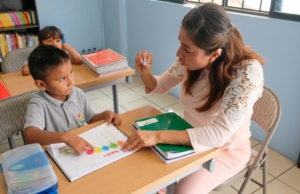
A real teacher listens beyond the words.
They notice hesitation.
They hear uncertainty in your voice.
They sense when you feel stuck or frustrated.
This allows them to adjust immediately — slow down, explain differently, or offer reassurance at the right moment.
Confidence in speaking does not grow from correction alone. It grows from feeling safe enough to try.
AI can respond based on prompts.
A teacher responds based on human awareness.
When learners struggle, they often need encouragement more than instruction. A teacher can say, “This is normal. Let’s try again.” That reduces anxiety — something many adult learners carry for years.
Empathy is not an add-on in language learning. It directly affects how much you are willing to speak.
Cultural Nuance and Context
Language is not only vocabulary and grammar. It is culture.
A teacher explains why one phrase sounds polite in one situation but distant in another. They clarify when something feels too formal, too direct, or too casual — especially in professional environments.
For example:
How direct can you be in a meeting?
When should you soften a request?
What tone fits your role at work?
Idioms, humor, social norms, and unwritten rules are difficult to understand without real-life examples. A teacher brings lived experience into the lesson.
AI can translate expressions.
A teacher explains how they feel in context.
Those nuances shape how confident and natural you sound. These communication details become especially important in professional environments such as meetings. I explore this further in my article on how to sound professional in English meetings.

What a Teacher Catches That AI Often Misses
AI can correct grammar.
But many learners struggle with things that do not appear in written corrections.
For example:
You hesitate before speaking because you fear sounding “not good enough.”
You choose overly complex phrases to sound professional.
You avoid contributing in meetings because you are translating in your head.
Your message is correct, but your tone doesn’t match the situation.
A teacher notices these patterns in real time.
Instead of only correcting the sentence, they help you change behaviour. That is where real speaking confidence develops. If building speaking confidence is one of your main goals, you may also enjoy this guide on practical exercises to build speaking confidence in English.
If you would like to experience this kind of personalised feedback in real conversation, you are welcome to start with a trial lesson.
Flexibility in Teaching Methods
Human teaching is dynamic.
If something does not work, a teacher changes direction.
If an explanation feels unclear, they rephrase.
If a student is tired or overwhelmed, they adjust the pace.
AI systems operate within structured patterns. They provide responses based on algorithms, not real-time emotional observation.
A teacher adapts to your learning style:
more structured explanations
more examples
more discussion
more correction
Flexibility makes learning efficient because it focuses on what you personally need — not what a program predicts you need. This kind of personalised adjustment is one of the reasons many learners prefer working with a teacher instead of relying only on automated tools.
Critical Thinking and Real Conversation
Language is not only about correct answers.
It is about thinking, responding, disagreeing, explaining opinions, and navigating ambiguity.
In real lessons, discussions evolve naturally. A teacher asks follow-up questions. They challenge your reasoning. They encourage you to expand your ideas.
This back-and-forth builds fluency and cognitive flexibility.
AI can generate responses.
A teacher creates dialogue.
That difference becomes especially important for professionals who need to express complex ideas, not just grammatically correct sentences.

Motivation Through Personal Interaction
Accountability changes behaviour.
When you know someone is following your progress, you are more likely to prepare, practise, and show up consistently.
Personal interaction also builds trust. Encouragement from a real person feels different from automated feedback.
Language learning involves moments of doubt. A teacher can turn those moments into progress rather than frustration.
Recognition, small adjustments, and human belief in your ability build long-term motivation.
The Best Results Come From Combining AI and Human Guidance
This is not about rejecting technology.
AI is an excellent tool for:
daily repetition
vocabulary building
quick writing feedback
rehearsal
A teacher helps you:
refine communication
build confidence
navigate cultural nuance
develop real conversational skills
Together, they create faster and more meaningful progress.
If your goal is not only correct English but confident communication in real situations, human guidance still makes the biggest difference.

Ready to make real progress in your speaking confidence?
If you would like structured support, personalised feedback, and real conversation practice, you can start with a trial lesson.
Continue Reading
If you’d like to explore related topics:

 ©steve-johnson-unsplash